Goals and ResultsH-GAC and community partners have committed to develop a nine-element Watershed Protection Plan (WPP) for the Cedar Bayou watershed by 1) targeted water quality sampling and analysis, 2) conducting a watershed source survey and developing a comprehensive GIS inventory, 3) analyze water quality data using Load Duration Curves and spatially explicit modeling, 4) establish and provide direction for a stakeholder group that will serve as a decision making body. |
 |
 |
 |
This project will give water quality managers the tools to help their decision-making in regard to maintaining and improving water quality within the Cedar Bayou Watershed. This project will result in:
- Analysis of NPS problems with the use of powerful GIS that will provide data to water quality managers to strengthen watershed modeling efforts.
- A Watershed Protection Plan for the Cedar Bayou Watershed that will provide a basis for a largely rural but developing watershed to prepare for anticipated growth and urbanization, address current impairments, and protect the significant economic and environmental interests threatened by current and future contamination.
- Help to local governments in incorporating appropriate BMPs in their jurisdictions, thereby ensuring that resources are not wasted on BMPs that will not work for their area.
Accomplishing the Goals
H-GAC will accomplish those overall objectives by working with local stakeholders (including Harris, Chambers and Liberty Counties, the Coastal, Harris County, and Trinity Soil and Water Conservation Districts, and the Galveston Bay Foundation, in conjunction with the project partners listed in Section I) the Clean Rivers Program and the TSSWCB to address current and future monitoring needs for watershed characterization, modeling for NPS loadings, and projecting load reductions.
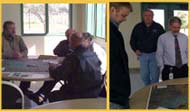
H-GAC will also develop an overall stakeholder process that engages local citizens and landowners, local elected officials, local agency staff, state and federal agencies, and local non-governmental organizations
Working Together
Components of this process will include the development of a stakeholder group, water quality monitoring, participation in the annual Rivers, Lakes, Streams, Bays and Bayous Trash Bash, educational development through the Texas Watershed Steward Program, and a series of workshops through H-GACs Clean Waters Initiative Program. These workshops will address the use of appropriate BMPs for the various NPS issues that the Cedar Bayou Watershed faces. |